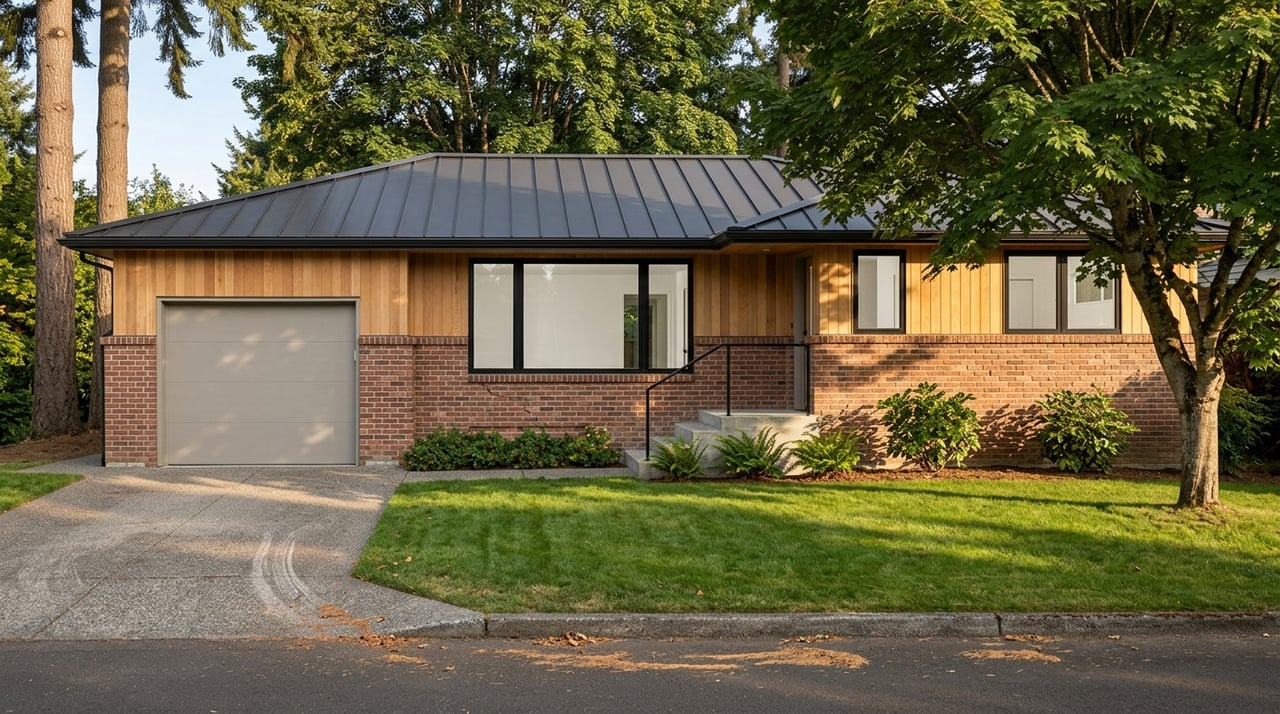
Mercer Island New Construction vs Remodel: How to Decide
June 11, 2026
June 11, 2026
Wondering whether you should build new, buy new, or remodel on Mercer Island? You are not alone. On an island where most residential land is already developed and many homes date back to the 1950s through 1970s, the right path depends as much on the lot and permitting realities as it does on the house itself. This guide will help you compare your options, understand the tradeoffs, and make a smarter decision for your timeline, budget, and long-term goals. Let’s dive in.
Mercer Island is a small, high-value housing market with limited room to grow. The city covers about 6.4 square miles and has 10,609 housing units, with a 67.0% owner-occupied rate. Median household income is $219,069, and the median value of owner-occupied homes is $2,000,001.
That context matters because Mercer Island is largely built out. The city’s 2024 land-use draft says about 95% of residential land is already developed, and only about 145 unimproved lots remain in single-family zones. In practical terms, that means most “new” single-family opportunities come from redevelopment, not untouched land.
The existing housing stock also shapes your decision. Nearly two-thirds of the city’s housing is detached single-family homes, and more than half of the homes were built between 1950 and 1979. So if you are evaluating whether to remodel or rebuild, you are often working with an older home on a valuable lot.
If you want a home tailored to your exact needs, building new gives you the most control. You can design around how you live today, prioritize modern systems and layouts, and avoid many of the compromises that come with an older floor plan.
On Mercer Island, though, building new usually means one of two things: buying one of the few vacant lots or tearing down an existing home and starting over. Because the island has so little undeveloped land left, teardown and rebuild projects are often the more realistic route.
Mercer Island classifies new single-family residences and demo-rebuild projects as substantial residential projects. That means you need intake screening before you even submit a building permit application. For new homes, the city also requires a topographic survey, and construction on a vacant lot triggers transportation concurrency review.
The review timeline is also important to understand early. The city’s target times include about 2 weeks for intake screening, 1 week for routing, 4 weeks for a first review of major building permits, 2 weeks for revisions, and 1 week to prepare an approved permit for issuance. Some residential building permits also require public notice, and a 30-day public comment period can extend the schedule.
On Mercer Island, a lot is never just a lot. Older neighborhoods often have smaller lots on regular grids, while newer areas may include steep slopes, irregular parcel shapes, mature trees, ravines, and small watercourses. Those features can directly affect what you can build and how long approvals may take.
Critical areas, shoreline jurisdiction, and seasonal construction limits can all add review layers. Work within 200 feet of the ordinary high water mark of Lake Washington may require a shoreline exemption or permit, depending on the scope. In erosion, potential slide, or steep-slope hazard areas, certain site work between October 1 and April 1 can also require additional approvals or waivers.
Tree protection is a major consideration in Mercer Island development. Tree removal tied to a development proposal is reviewed with the permit, and city staff inspect before and after development to enforce protection and replacement requirements when applicable. In many cases, tree permits are required.
Costs can also differ sharply from a remodel. Mercer Island charges impact fees for new development at building permit issuance, with park and transportation fees currently being collected. By contrast, replacement residences and remodeling or reconstruction of existing dwellings are exempt from impact fees.
Building new may be the best fit if you:
For the right property, a new build can be a strong long-term play. But on Mercer Island, success often comes down to choosing the right site before you ever sketch the house.
If your top priority is convenience, buying a newly built home can be the simplest option. You skip much of the design and permitting process, get a home that is move-in ready, and can focus on location, layout, and finishes rather than construction logistics.
The tradeoff is supply. Mercer Island’s housing and land-use planning documents make clear that future single-family development is constrained and that most new homes in single-family areas come from redevelopment. That means truly new inventory tends to be limited.
Buying new can reduce uncertainty. Instead of managing design decisions, permit review, and site consultants, you are evaluating a finished product or a home already well along in construction.
This path can work well if you want modern living without taking on a project. It can also be appealing if your timeline is tight and you do not want to wait through municipal review periods, potential revisions, and site-driven surprises.
Not all new homes are equal, especially in a market shaped by redevelopment. A newly built home may solve the age and layout issues common in older housing stock, but you still want to evaluate the lot, privacy, access, and overall fit for your long-term plans.
Because new supply is limited, competitive conditions can also shape your choices. In a constrained market, the best new homes may not stay available for long, and off-market sourcing or fast decision-making can matter.
For many Mercer Island homeowners and buyers, remodeling seems like the balanced option. You keep a location you like, improve what no longer works, and may avoid the full cost and disruption of a teardown.
That can be true, but only up to a point. On Mercer Island, some remodels stay straightforward, while others start to function more like new construction from a permitting and site-review standpoint.
The city separates simple residential projects from substantial ones. Non-structural interior remodels, basic decks, skylights, simple window or door size changes, and minor repairs are considered simple projects.
Once the project grows, the path changes. Additions or site changes that add 500 square feet or more of footprint, create 500 square feet or more of impervious surface, or affect critical areas move into the substantial-project category.
A major remodel often hinges on whether you stay within the existing envelope or start pushing beyond it. For substantial residential projects, the city may require intake screening plus items like a site development worksheet, stormwater materials, tree inventory and replacement information, a topographic survey, and supplemental geotechnical, critical-area, arborist, or concurrency documents when applicable.
In other words, two remodels with similar goals can follow very different paths. One may be mostly interior and relatively manageable. Another may trigger stormwater review, tree issues, slope concerns, or access requirements that expand the timeline and budget.
This is especially true for waterfront or hillside properties. Shoreline-jurisdiction work has its own approval path, and work in geohazard or steep-slope areas can become more sensitive during the wet season.
That is why remodel potential on Mercer Island is highly site-specific. Square footage alone does not tell the story. The lot and the constraints often do.
In many Mercer Island cases, the most strategic option is not to buy new or rebuild right away. It is to buy an older home where the lot gives you room to improve over time.
This approach can work well because so much of the island’s housing stock is older. If the house is livable today and the site supports future expansion, you may gain flexibility without having to solve everything at once.
In Mercer Island’s single-family zones, minimum lot sizes range from 8,400 to 15,000 square feet. The city also applies a 30-foot maximum building height and a maximum gross floor area of 40% of net lot area, while slope can further limit lot coverage.
That means the current house is only part of the equation. The lot’s conformity, frontage, slope, and usable building envelope may matter just as much as the existing kitchen, finishes, or bedroom count.
Generally, the most adaptable lots are the ones that already fit the zoning well. Level or gently sloped lots, enough width for setbacks, and fewer tree or critical-area complications often create clearer upgrade paths.
By contrast, steep or environmentally constrained sites can still be valuable, but they tend to add complexity. You may need more engineering, arborist review, stormwater planning, or shoreline analysis before expanding the home.
If you are deciding between build new, buy new, or remodel, it helps to frame the choice around your priorities rather than just the house itself.
| Path | Best for | Main advantage | Main challenge |
|---|---|---|---|
| Build new | Buyers who want customization | You control layout, systems, and finishes | Longer permitting and more site sensitivity |
| Buy new | Buyers who want speed and convenience | Fastest move-in path | Limited inventory on a built-out island |
| Remodel | Owners or buyers who like the current location | Can preserve lot value while improving function | Large projects can trigger substantial review |
| Buy older and upgrade later | Strategic buyers focused on long-term flexibility | Lets you secure the lot first | Future potential depends on zoning and site conditions |
Start with the site, not the vision board. On Mercer Island, land constraints, older housing stock, mature trees, slopes, and shoreline factors can all shape what is realistic.
Then weigh your timeline and tolerance for complexity. If you need a move-in-ready solution, buying new may be the cleanest answer. If you want the best long-term fit and can navigate more process, building new or buying for future redevelopment may offer more upside.
For many buyers, the winning strategy is to identify an older home on a strong lot and make phased improvements over time. That can give you flexibility now while preserving future options as your needs change.
If you are weighing a Mercer Island property and want to understand whether the lot supports your long-term plan, the team at Foundation First Group can help you evaluate the opportunity from both a resale and development perspective.
Stay up to date on the latest real estate trends.
Foundation First Group's expertise includes assisting buyers and sellers of all property types, including single-family homes, condominiums, vacant land, and investment properties.