The Two-Year Rebuild: What a Stalled Teardown Reveals About Mercer Island Lot Values
October 1, 2026
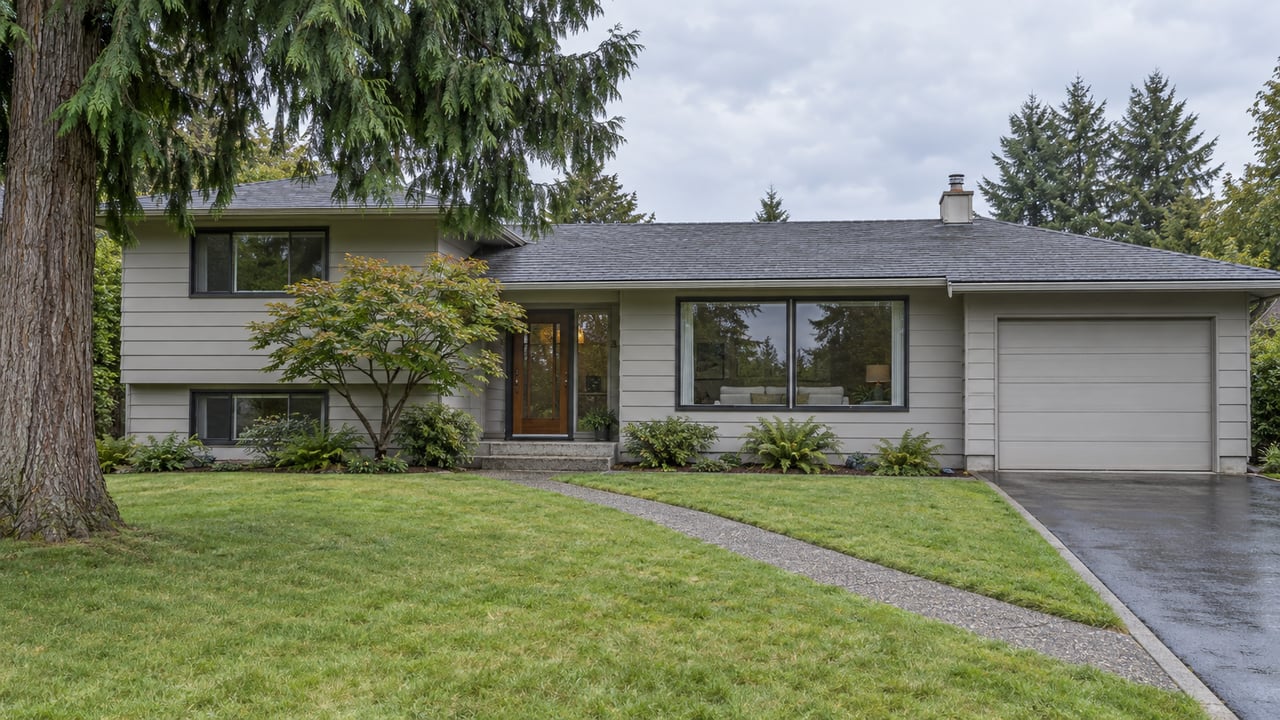
According to a Citizen Portal report, on September 26, 2025, a Mercer Island hearing examiner sat through a Zoom hearing on a single-family lot that most buyers would look at and see nothing but opportunity: a small, tired 1953 house on a lot big enough for something three times its size. The owners wanted to tear it down and build new. Two years into the process, they were still asking permission.
The house itself wasn't the problem. An inspection had found foundation settlement and localized framing rot, the kind of damage a builder expects in a 70-year-old structure. The problem was the ground under it. Wetland and watercourse buffers, steep-slope constraints, and an access easement covered enough of the parcel that there was almost nowhere left to build without a variance from the city's critical areas code. The owners needed a front-yard setback deviation, cutting the standard 20-foot requirement down to 10, and a reasonable use exception from the wetland and watercourse rules,
Their architect, Regan McClellan of McClellan Talone Architects, laid out the math for the hearing examiner. A full remodel that kept the house's legally nonconforming status was possible in theory, but more than 40 percent of the exterior walls would need to be rebuilt to address the rot, which is enough work that it would likely trigger full code compliance anyway. Builder Jeffrey Wenzel of Mercer Builders had documented the damage. The estimated cost of that remodel path: $800,000 to $1,000,000, with no guarantee it would resolve the underlying nonconformity.
McClellan told the hearing examiner the owners had considered three paths before landing on the reasonable use exception:
The Citizen Portal report quotes McClellan as calling all three economically impractical. That characterization is worth sitting with, because it's coming from the professional whose job is to find the buildable path on a constrained lot; even he ranked "wait for the house to fall down" as a live option.
By the time of the hearing, the applicant team told the examiner they had been working with city staff for nearly two years. Hearing Examiner Phil Walbrechts said he expected to issue a written decision within a few weeks, and signaled that approval with conditions was likely, but the record was still missing a full critical area impact and mitigation assessment from a biologist, something that would need to happen later, at the building permit stage. Two years in, and the mitigation plan hadn't even been written yet.
A buyer or investor scanning Mercer Island listings for a teardown opportunity is usually running one calculation: lot size against zoning designation, then comparing the resulting buildable envelope to what's already standing. Mercer Island's zoning code, Title 19 of the city's Unified Land Development Code, does spell out minimum lot size, setbacks, maximum floor area, and lot coverage by zone. That's the layer most people check.
It's not the layer that stopped the owners. Their lot sits adjacent to off-site wetlands and a Type F watercourse whose buffers extend onto the property itself. That's a separate regulatory system entirely, governed by Chapter 19.07 of the city code, the Environmental chapter, which exists because Washington state law requires cities to protect critical areas under the Growth Management Act. A lot can meet every dimensional standard in the zoning code and still be functionally unbuildable once you account for where the wetland buffer falls.
This distinction matters because the two systems produce very different information for a buyer to find:
| Constraint | Where it lives | What it limits | How you'd check before an offer |
|---|---|---|---|
| Zoning envelope | Title 19, single-family zone standards | Setbacks, height, floor area, lot coverage | Zoning designation, available through the city's zoning map |
| Critical area buffer | Title 19, Chapter 19.07 (Environmental) | Whether and where you can build on the lot at all | Wetland and watercourse delineation, critical areas notice on title, city map portal |
The zoning envelope is public and easy to pull. The critical area buffer usually requires either an existing wetland study on file with the city or a new one commissioned by whoever wants to build.
The owners' case isn't an isolated example from a single unlucky lot. The city's own staff report on a separate 2025 application described another house built in 1953, originally a cabin for a local Boy Scouts leader, sitting at 1,708 square feet against a neighborhood average of 3,975 square feet across eight surrounding homes. Same era of construction, same pattern: a small house on a lot where the buffers now do more to limit redevelopment than the zoning code does.
The friction isn't limited to full teardowns either. A separate appeal, heard on February 27, 2026, involved a property on North Mercer Way where a neighbor appealed the permit approval for a gazebo, greenhouse, and retaining wall, specifically because the site contains critical areas. If a backyard greenhouse can generate a formal appeal under the city's critical area review process, the same rules apply with more force to a full rebuild. The City of Mercer Island lists the 2026 fee to file that kind of appeal at $1,820, covering the first 10 hours of city staff time.
Mercer Island's median sale price sat at $2.5 million for the three months ending in June 2026, with homes averaging about 9 days on market and roughly two offers each, according to Redfin's tracking of the local market. That headline number describes what a typical closed transaction looks like. It says nothing about what a specific older, smaller house on a specific lot is actually worth to someone planning to replace it.
The gap between those two numbers is where the critical areas question lives. A lot priced as if its only constraint is the zoning envelope, several hundred thousand dollars below newer construction nearby, might be a genuine opportunity. It might also be a lot where the real cost isn't the purchase price but the eighteen to twenty-four months of critical area review, biologist-prepared mitigation plans, and hearing examiner testimony standing between closing and a shovel in the ground.
Before treating an older Mercer Island house as a rebuild candidate, it's worth checking a few things that don't show up in a standard listing:
None of this shows up in price per square foot. All of it shows up in the timeline.
Does this only affect waterfront lots? No. The owners' property and the comparable 1953 cabin case both involve wetland and watercourse buffers.
How would I know if a lot has this problem before making an offer? The city's map portal shows environmental layers, including mapped critical areas, but the city itself notes this data is drawn from historic maps and remote sensing, useful for a general sense of risk but not a substitute for a field delineation before you commit.
An old house on a big Mercer Island lot can still be exactly the opportunity it looks like. The only way to know which kind of lot you're looking at is to check the layer of regulation that doesn't show up on the flyer.
If you're evaluating a Mercer Island property with rebuild potential and want to know what's actually buildable before you write an offer, Foundation First Group can walk the critical area records with you and help you price the lot for what it will actually take to build on it.
This article is general information, not legal, tax or financial advice. Consult a qualified professional about your situation.
Stay up to date on the latest real estate trends.
Foundation First Group's expertise includes assisting buyers and sellers of all property types, including single-family homes, condominiums, vacant land, and investment properties.